
6 The Church
What is the Church and who are the witnesses?

On Pentecost, exactly 50 days after Christ’s resurrection, the church was founded when the Spirit of God was poured onto those who believed. The church started simply as the group of people called by God, who, having answered that call, were to be saved:
And they, continuing daily with one accord in the temple, and breaking bread from house to house, did eat their meat with gladness and singleness of heart,
Praising God, and having favour with all the people. And the Lord added to the church daily such as should be saved. (Acts 2:46-47)
The conduct of that early church is inspiring. Their interactions were every day, not once a week. They frequented the temple, the very heart of the religious establishment that had killed Christ, yet they were unafraid. They acted openly and with gallantry in the face of opposition and hatred. They went from house to house, having no property of their own. Their interactions were centred around meals and conversation, not formal worship. They were united and active. How entirely different from the churches of today, who toady to the state, and to popular culture, and who meet weekly in huge buildings for structured worship, where the role of the membership is largely passive. The church became rich and powerful, an instrument of the establishment, and then it became divided and torpid. What is going on?
The Ekklēsia
The word translated as “church” in the New Testament is “ekklēsia”. It means an assembly or gathering, and is a compound word combining “ek” meaning from or out of (a place, time, or cause) and kaleō meaning call or invite. Thus, it literally means “to call out from”. Notably, the very word implies willing consent on the part of those called, as there is no hint of force or demand. And from what is the gathering coming out? As Peter said on Pentecost:
Save yourselves from this untoward generation. (Acts 2:40)
Thus, it is the current generation, the world that rejects God, the people in rebellion against God, that we are called to come out from. It is a special and telling word indeed.
And how did it come to be called “church” in English? It originated from the Greek Kyriakos oikos, meaning "Lord's house". This became the Norse kirkja, and this became the word Kirk used in Scotland and northern England. In the south of Britain, It became the Old English cirice using a soft-c rather than a hard-k sound. This, in turn, became “church”.
The first occurrence of the word being translated as Church is in the Gospel according to Matthew:
He saith unto them, But whom say ye that I am?
And Simon Peter answered and said, Thou art the Christ, the Son of the living God.
And Jesus answered and said unto him, Blessed art thou, Simon Barjona: for flesh and blood hath not revealed it unto thee, but my Father which is in heaven.
And I say also unto thee, That thou art Peter, and upon this rock I will build my church; and the gates of hell shall not prevail against it. (Mat 16:15-18)
So it is Christ’s church, his called-out ones. It is built upon the rock that is Christ, the profession of the saints that Christ is the Son of the living God, and the Spirit sent by the Father to teach and give insight and discernment.
The word translated as build, means literally “to build a house up from the foundation.” House implies closeness, as in a family. Building implies work, patience, and a sequence culminating in completion. This metaphor of building and construction is used often, for example, in Paul’s letter to the Ephesians:
Now therefore ye are no more strangers and foreigners, but fellow citizens with the saints, and of the household of God;
And are built upon the foundation of the apostles and prophets, Jesus Christ himself being the chief corner stone;
In whom all the building fitly framed together groweth unto an holy temple in the Lord:
In whom ye also are builded together for an habitation of God through the Spirit. (Eph2:19-22)
Lest anyone should think Peter is the rock on whom the church is built, this makes it clear that it is Christ.
Paul here also clarifies that we are to be a holy temple, a place where God resides.
The Church in the World
The first-century and second-century church was very different from what came later. In their practices and in their history, the mainstream churches of Christendom do not greatly resemble the early church.
Dr Tom Wadsworth has published extensive and excellent work on this subject. He points out that the early church was not routinely engaged in worship but rather in edifying one another. The word translated as "edify” is oikodomē, which means to build up, or metaphorically, to promote another's growth in Christian wisdom, piety, holiness, and happiness. It is therefore a direct response to Christ’s words “ upon this rock I will build my church”.
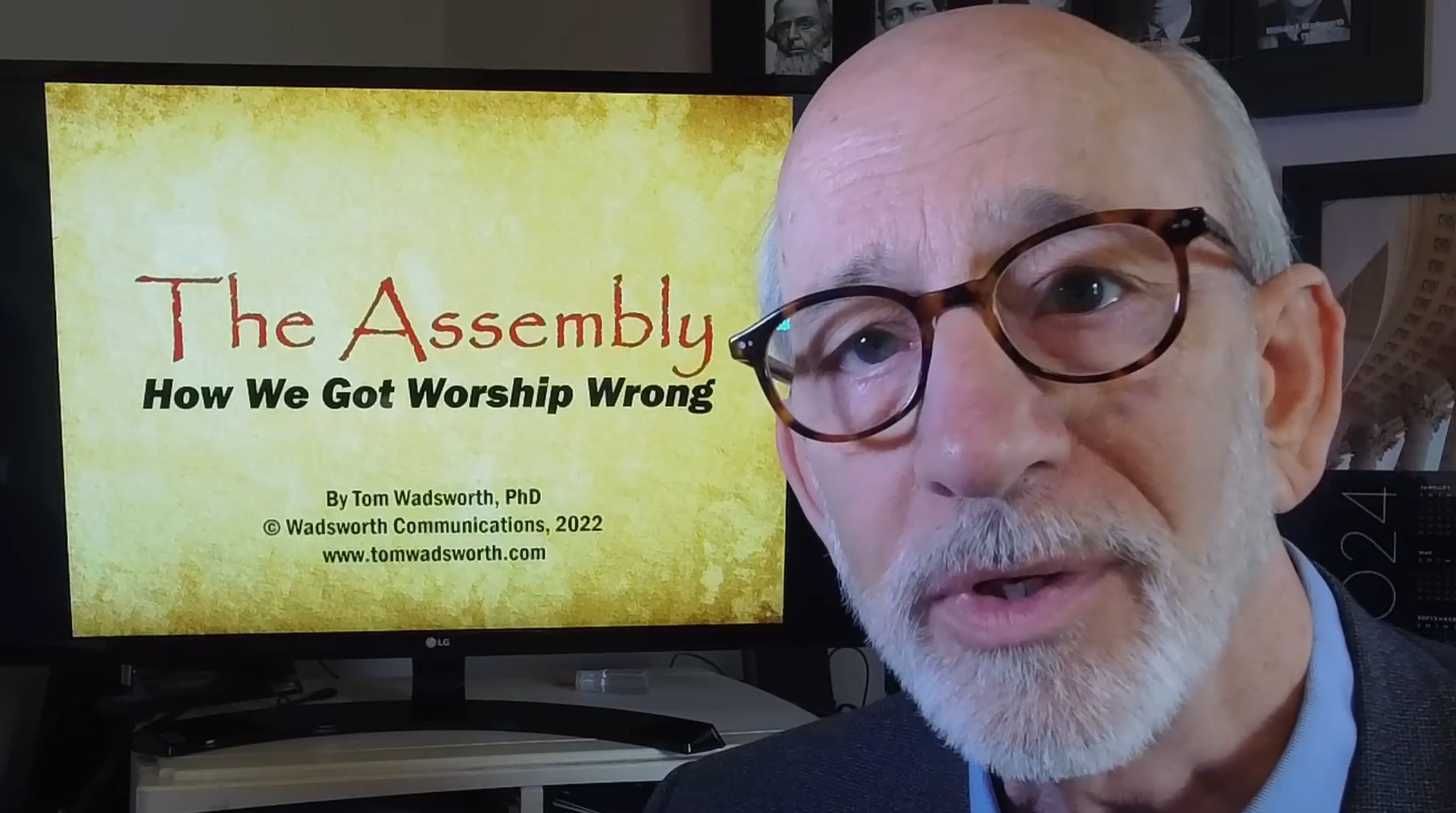
So the church has changed in its practices, almost beyond recognition. Yet the definition of what the church is, and is for, comes from the churches themselves. Could this, too, have changed? Could what we are told about the role of the church be misleading?
Many churches or denominations see themselves as the living embodiment of the early church or primary inheritors of the spirit that founded it. Yet none look like that church, nor practice Christianity as their first-century brothers and sisters did. Do they see clearly what the church is? Or do we need an outside perspective to reveal the truth?
As Robert Burns wrote in “To a Louse”
O wad some Pow’r the giftie gie us
To see oursels as others see us!
It wad frae monie a blunder free us
An’ foolish notion:
What airs in dress an’ gait wad lea’e us,
And ev’n Devotion!
To get a viewpoint from outside the church, we need to go to scripture, to the parables and letters of Christ, and the prophecies of old.
Parables
Jesus spoke in parables not to make it easy for people to understand, but to conceal his message from those who do not wish to understand.
And the disciples came, and said unto him, Why speakest thou unto them in parables?
He answered and said unto them, Because it is given unto you to know the mysteries of the kingdom of heaven, but to them it is not given…
Therefore speak I to them in parables: because they seeing see not; and hearing they hear not, neither do they understand. (Mat 13:10-11,13)
The thirteenth chapter of Matthew contains seven parables; some are explained, some are not. One that is explained in full is the parable of the sower:
Behold, a sower went forth to sow;
And when he sowed, some seeds fell by the way side, and the fowls came and devoured them up:
Some fell upon stony places, where they had not much earth: and forthwith they sprung up, because they had no deepness of earth:
And when the sun was up, they were scorched; and because they had no root, they withered away.
And some fell among thorns; and the thorns sprung up, and choked them:
But other fell into good ground, and brought forth fruit, some an hundredfold, some sixtyfold, some thirtyfold. (Mat 13:3-8)
Later, in private, Christ explained the meaning to his followers:
When any one heareth the word of the kingdom, and understandeth it not, then cometh the wicked one, and catcheth away that which was sown in his heart. This is he which received seed by the way side.
But he that received the seed into stony places, the same is he that heareth the word, and anon with joy receiveth it;
Yet hath he not root in himself, but dureth for a while: for when tribulation or persecution ariseth because of the word, by and by he is offended.
He also that received seed among the thorns is he that heareth the word; and the care of this world, and the deceitfulness of riches, choke the word, and he becometh unfruitful.
But he that received seed into the good ground is he that heareth the word, and understandeth it; which also beareth fruit, and bringeth forth, some an hundredfold, some sixty, some thirty. (Mat 13:19-23)
So we see here some of the metaphors that are used. The fouls or birds signify the wicked, the heat of the sun denotes persecution and tribulation, and thorns are the cares of the world.
Jesus spoke a second parable, the tares amongst the wheat:
Another parable put he forth unto them, saying, The kingdom of heaven is likened unto a man which sowed good seed in his field:
But while men slept, his enemy came and sowed tares among the wheat, and went his way.
But when the blade was sprung up, and brought forth fruit, then appeared the tares also.
So the servants of the householder came and said unto him, Sir, didst not thou sow good seed in thy field? from whence then hath it tares?
He said unto them, An enemy hath done this. The servants said unto him, Wilt thou then that we go and gather them up?
But he said, Nay; lest while ye gather up the tares, ye root up also the wheat with them.
Let both grow together until the harvest: and in the time of harvest I will say to the reapers, Gather ye together first the tares, and bind them in bundles to burn them: but gather the wheat into my barn. (Mat 13:24-30)
And again Christ gives a full and detailed explanation of what the symbols mean:
Then Jesus sent the multitude away, and went into the house: and his disciples came unto him, saying, Declare unto us the parable of the tares of the field.
He answered and said unto them, He that soweth the good seed is the Son of man;
The field is the world; the good seed are the children of the kingdom; but the tares are the children of the wicked one;
The enemy that sowed them is the devil; the harvest is the end of the world; and the reapers are the angels.
As therefore the tares are gathered and burned in the fire; so shall it be in the end of this world. (Mat 13:36-40)
Thus, the field represents the world. The tares are the children of evil. This metaphor is very interesting as it describes Darnel (Lolium temulentum); a poisonous, ryegrass weed that closely resembles wheat, especially during its early growth. So one must conclude that evildoers and the righteous are difficult to tell apart to begin with, but that the difference becomes obvious as they mature - a challenge in many ways.
Now these two parables are explained in full and thus are well understood. Some of the others, however, are not. And the common interpretations for these go against the definitions of the symbols already established. One example is the parable of the mustard seed:
Another parable put he forth unto them, saying, The kingdom of heaven is like to a grain of mustard seed, which a man took, and sowed in his field:
Which indeed is the least of all seeds: but when it is grown, it is the greatest among herbs, and becometh a tree, so that the birds of the air come and lodge in the branches thereof. (Mat 13:31-32)
This is most often interpreted (by the churches) as a ringing endorsement; a prophecy that the church, although starting small, will fill the world with the word of God. But does it really mean that?
Wild mustard grows all over the Land of Israel. It is an annual herbaceous plant that flowers in the spring with vivid yellow flowers. The plant’s Latin name is Sinapsis Arvensis, and it generally grows to a height of about one to three feet, but, in ideal conditions, it can grow much larger, up to ten to fifteen feet.
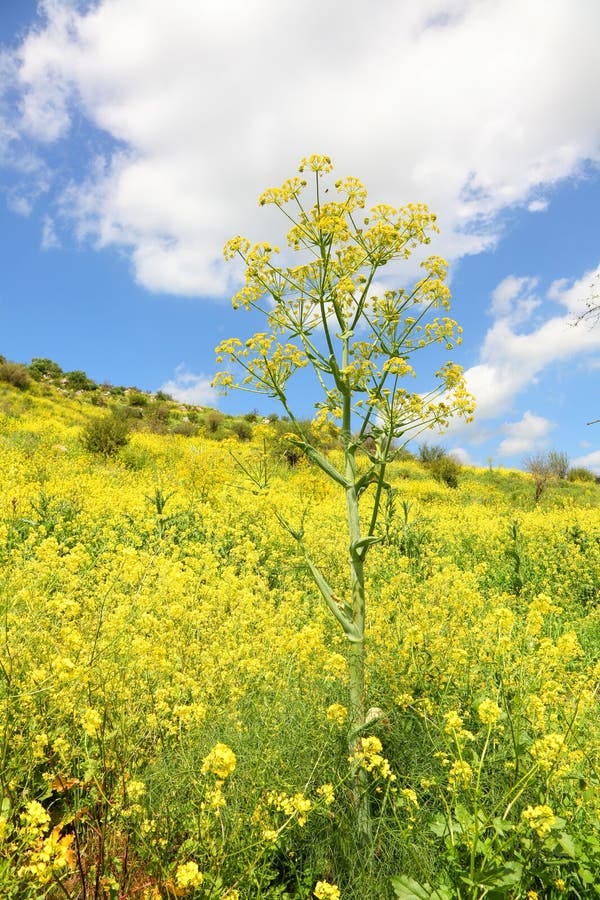
But what do the birds of the air signify? They symbolise the wicked. So what does this parable really mean? Not the godly triumph of the Church but its rapid physical growth and its attraction for the wicked.
There’s more: the parable of the leaven:
Another parable spake he unto them; The kingdom of heaven is like unto leaven, which a woman took, and hid in three measures of meal, till the whole was leavened. (Mat 13:33)
This too is commonly interpreted by the churches as a prophecy that, during the church age, the word of God will fill the whole earth. They say that the leaven is the power of God’s grace, and the parable shows how the gospel changes people from within, eventually transforming them wholly. But leaven, as we have already discovered (see article four on the Feast of Unleavened Bread), symbolises not grace but sin. The word ‘meal’ in the parable above means wheat flour, and wheat, as in the story of the tares, represents the good seed, the children of God. A woman is a symbol for the church. So we have another interpretation, a scriptural one. The church has concealed lies and sins amongst the faithful, who have first been ground down. And just as leaven silently and gradually changes the flour, so will sin gradually change the followers of Christ. Until, eventually, the whole mass of Christianity is corrupted.
Thus, in the parables, we see a complex and difficult struggle. The field of the conflict is the world. There is good seed and good soil, but many difficulties and obstacles. There is opposition, and evil, corruption and sabotage. Sin is present, and so there is deception and dark wickedness where we should have hoped for light. Is this not what we see in the church today? Is this not what we have always seen? Even in the first century, when the apostles lived, Paul wrote:
For the mystery of iniquity doth already work (2 Th 2:7)
Given that the story of the church is complex and difficult, we will next seek other biblical insights.
Ruth
The short and beautiful book of Ruth is a further analogy for the church. Ruth was from outside the nation of Israel. She was a Moabitess, a gentile. She married into Israel.
Tragedy struck, and she was left a widow. It was a double tragedy as two Israelite brothers both died, leaving their mother Naomi and her two daughters-in-law destitute in the land of Moab. Naomi decided to return to her own land and people and sent the two young women back to their people to find husbands:
And Naomi said unto her two daughters in law, Go, return each to her mother’s house: the LORD deal kindly with you, as ye have dealt with the dead, and with me.
The LORD grant you that ye may find rest, each of you in the house of her husband. Then she kissed them; and they lifted up their voice, and wept. (Ruth 1: 8-9)
One of them, named Orpah departed, but Ruth would not go. She said:
And Ruth said, Intreat me not to leave thee, or to return from following after thee: for whither thou goest, I will go; and where thou lodgest, I will lodge: thy people shall be my people, and thy God my God:
Where thou diest, will I die, and there will I be buried: the LORD do so to me, and more also, if ought but death part thee and me. (Ruth 1: 16-17)
Thus, Ruth, of her own free will, despite dangers, risks and hardships, chose to follow the true God of Israel and Issac and Abraham. As Paul wrote to the Galatian church:
And if ye be Christ's, then are ye Abraham's seed, and heirs according to the promise. (Gal 3:29)
She, like the gentile believers in the church, was grafted into Israel.
She then met a relative of her mother-in-law called Boaz, an ancestor of Christ and here representing a type of Christ; he was her Kinsman Redeemer. This is a type of Christ, for as Job said:
For I know that my redeemer liveth, and that he shall stand at the latter day upon the earth. (Job 19:25)
And therefore, there is much to learn of the church and its relationship to Christ by studying Ruth and her relationship to Boaz.
It is interesting that the same symbols used hundreds of years later by Christ in his parables also occur in Ruth:
And Naomi had a kinsman of her husband’s, a mighty man of wealth, of the family of Elimelech; and his name was Boaz.
And Ruth the Moabitess said unto Naomi, Let me now go to the field, and glean ears of corn after him in whose sight I shall find grace. And she said unto her, Go, my daughter.
And she went, and came, and gleaned in the field after the reapers: and her hap was to light on a part of the field belonging unto Boaz, who was of the kindred of Elimelech.
And, behold, Boaz came from Bethlehem, and said unto the reapers, The LORD be with you. And they answered him, The LORD bless thee.
Then said Boaz unto his servant that was set over the reapers, Whose damsel is this?
And the servant that was set over the reapers answered and said, It is the Moabitish damsel that came back with Naomi out of the country of Moab:
And she said, I pray you, let me glean and gather after the reapers among the sheaves: so she came, and hath continued even from the morning until now, that she tarried a little in the house.
Then said Boaz unto Ruth, Hearest thou not, my daughter? Go not to glean in another field, neither go from hence, but abide here fast by my maidens: (Ruth 2:1-8)
Again, the field is a symbol of the world; the seed is the children of the Kingdom; and the reapers are the angels. The women represent churches. One is faithful, the other goes back to her former life. Looking at the work of the church, we see that it is not the major partner in the harvest, but rather gleans good seed that would otherwise be lost. The angels, heavenly beings, are doing the main work. Boaz (Christ) instructs Ruth (the church) to remain in his field and not to go elsewhere. How many contemporary churches focus on matters that are far from Christ, refusing to remain in his field?
And Naomi said unto her daughter in law, Blessed be he of the LORD, who hath not left off his kindness to the living and to the dead. And Naomi said unto her, The man is near of kin unto us, one of our next kinsmen.
And Ruth the Moabitess said, He said unto me also, Thou shalt keep fast by my young men, until they have ended all my harvest. (Ruth 2: 20-21)
From this, we know that the church will endure until the end of the spiritual harvest.
And when they marry, Boaz announces:
Moreover, Ruth the Moabitess, the wife of Mahlon, have I purchased to be my wife, to raise up the name of the dead upon his inheritance, that the name of the dead be not cut off from among his brethren, and from the gate of his place: ye are witnesses this day.
And all the people that were in the gate, and the elders, said, We are witnesses. The LORD make the woman that is come into thine house like Rachel and like Leah, which two did build the house of Israel: and do thou worthily in Ephratah, and be famous in Bethlehem:
And let thy house be like the house of Pharez, whom Tamar bare unto Judah, of the seed which the LORD shall give thee of this young woman. (Ruth 4: 9-12)
So, as Boaz purchased the inheritance and the bride, so Christ purchased (by his own blood) the church, the bride of Christ, so that the dead would have an inheritance. Paul knew this also, and it is recorded in the book of Acts:
Take heed therefore unto yourselves, and to all the flock, over the which the Holy Ghost hath made you overseers, to feed the church of God, which he hath purchased with his own blood.
For I know this, that after my departing shall grievous wolves enter in among you, not sparing the flock.
Also of your own selves shall men arise, speaking perverse things, to draw away disciples after them. (Acts 20: 28-30)
Again, the picture Paul paints is of truth being present in the church due to the blood of the lamb, but this truth is assailed from all sides by lies and corruption.
Letters
And then we have the letters to the churches. Paul wrote to seven churches at length, and Christ, in Revelation, also addressed letters to seven churches. Thus, there is a vast amount of information in letter form. Space precludes more than a brief sample, and, for this, we turn to Christ’s message to the church in Sardis:
And unto the angel of the church in Sardis write; These things saith he that hath the seven Spirits of God, and the seven stars; I know thy works, that thou hast a name that thou livest, and art dead.
Be watchful, and strengthen the things which remain, that are ready to die: for I have not found thy works perfect before God.
Remember therefore how thou hast received and heard, and hold fast, and repent. If therefore thou shalt not watch, I will come on thee as a thief, and thou shalt not know what hour I will come upon thee. (Rev 3: 1-3)
Again, we see a mixed and broadly negative picture “thou… art dead”. There is a call to repentance, not original repentance as in the individual sinful human being, but collectively for a church that has had the truth delivered to it, but which has corrupted that message. And within this imperfect organisation, there remain individuals whose hearts are turned to Christ:
Thou hast a few names even in Sardis which have not defiled their garments; and they shall walk with me in white: for they are worthy.
He that overcometh, the same shall be clothed in white raiment; and I will not blot out his name out of the book of life, but I will confess his name before my Father, and before his angels.
He that hath an ear, let him hear what the Spirit saith unto the churches. (Rev 3: 1-6)
There is very much more to understand, but the contrast between the institutional church and the individual servant of God is clear.
The Two Loaves
At the Pentecost ceremony in the temple, the priests were instructed to perform a ceremony involving two leavened loaves.
Ye shall bring out of your habitations two wave loaves of two tenth deals: they shall be of fine flour; they shall be baken with leaven; they are the firstfruits unto the LORD.
And the priest shall wave them with the bread of the firstfruits for a wave offering before the LORD (Lev 23:17,20)
This is reminiscent of the wave sheaf held up by the priest during the Feast of Unleavened Bread, and which symbolised Christ risen from the dead. But here there are differences; there are two loaves, not one, and they contain leaven, a symbol for sin. Hence, the individuals denoted by these loaves are human, not divine. So we must look for two human beings, imbued with the spirit of God, who rise from the dead, but are simply men, containing sin within. The only relevant example in scripture is the two witnesses who preach the word of God, just before the return of Christ to this earth:
And I will give power unto my two witnesses, and they shall prophesy a thousand two hundred and threescore days, clothed in sackcloth.
These are the two olive trees, and the two candlesticks standing before the God of the earth.
And if any man will hurt them, fire proceedeth out of their mouth, and devoureth their enemies: and if any man will hurt them, he must in this manner be killed.
These have power to shut heaven, that it rain not in the days of their prophecy: and have power over waters to turn them to blood, and to smite the earth with all plagues, as often as they will.
And when they shall have finished their testimony, the beast that ascendeth out of the bottomless pit shall make war against them, and shall overcome them, and kill them.
And their dead bodies shall lie in the street of the great city, which spiritually is called Sodom and Egypt, where also our Lord was crucified.
And they of the people and kindreds and tongues and nations shall see their dead bodies three days and an half, and shall not suffer their dead bodies to be put in graves.
And they that dwell upon the earth shall rejoice over them, and make merry, and shall send gifts one to another; because these two prophets tormented them that dwelt on the earth.
And after three days and an half the Spirit of life from God entered into them, and they stood upon their feet; and great fear fell upon them which saw them.
And they heard a great voice from heaven saying unto them, Come up hither. And they ascended up to heaven in a cloud; and their enemies beheld them.
And the same hour was there a great earthquake, and the tenth part of the city fell, and in the earthquake were slain of men seven thousand: and the remnant were affrighted, and gave glory to the God of heaven. (rev 11:3-13)
These two witnesses were also predicted by the prophet Zechariah and described thus:
And said unto me, What seest thou? And I said, I have looked, and behold a candlestick all of gold, with a bowl upon the top of it, and his seven lamps thereon, and seven pipes to the seven lamps, which are upon the top thereof:
And two olive trees by it, one upon the right side of the bowl, and the other upon the left side thereof.
So I answered and spake to the angel that talked with me, saying, What are these, my lord?
Then the angel that talked with me answered and said unto me, Knowest thou not what these be? And I said, No, my lord.
…
Then answered I, and said unto him, What are these two olive trees upon the right side of the candlestick and upon the left side thereof?
…
And he answered me and said, Knowest thou not what these be? And I said, No, my lord.
Then said he, These are the two anointed ones, that stand by the Lord of the whole earth.
Now this all occurs at the very end of the present age, just before the Lord returns in power and glory:
And this gospel of the kingdom shall be preached in all the world for a witness unto all nations; and then shall the end come. (Mat 24:14)
So we see the two witnesses, the anointed ones who stand by the Lord, preach the Gospel of the Kingdom for a witness, just before the end of this age and the return of the King. It is preached as a witness. This raises some questions: What gospel have the established church organizations been preaching for nearly two thousand years that necessitates God raising up two men to bear witness to the truth? Have the established churches claimed to be fulfilling this task whilst failing and being spiritually dead?
Concluding Remarks
Pentecost represents the establishment of both old and new covenants, and its primary meaning is the establishment of a covenantal relationship between God and mankind. It encapsulates both the old covenant spoken by God in person to the Israelites from the mountaintop and the new covenant, where those same laws are written in the hearts of believers, not on tablets of stone. It is this new covenant which gives access to the holy spirit, that can dwell within us and transform the people of God by changing their hearts from cold stone to warm, loving flesh.
The people thus transformed are the first fruits of Christ’s great harvest.
But the path is not smooth. Corruption and evil surround the venture and:
…many are called, but few are chosen. (Mat 22:14)
Churches sometimes return to ways that are far from God’s ways, as Ruth's sister-in-law returned to her own people. Churches can become spiritually dead, like the church at Sardis. They often conceal the leaven of sin among their congregations. They attract evil-doers and corruption. But, notwithstanding all of this travail, those who follow Christ still exist and walk in faithfulness and obedience. There are, still to appear, two notable examples of this triumph, the anointed ones who will proclaim the Gospel of the Kingdom just before the end of this world and the return of our Lord in Glory.
It is thus an imperfect day in which we live, and as a result, like Paul, we find ourselves groaning:
And not only they, but ourselves also, which have the firstfruits of the Spirit, even we ourselves groan within ourselves, waiting for the adoption, to wit, the redemption of our body. (Rom 8:23)
That glorious day when our bodies are transformed, when our Lord returns in glory to rule upon the earth, is the subject of the next article titled “The Trumpet Sounds”.
Come out of Babylon. This is written in Isaiah, Jeremiah and other books. The church IS Babylon. While this connection is not in the bible, it is apparent when you study Babylonian religious practices.
Just as an afterthought - stunning comment by Trump on Easter Sunday - he claims he is a Christian and that God is using him. This is the same God who said "thou shalt no kill" and Jesus who said "those who live by the sword will die by the sword". what appalling Christian witness.